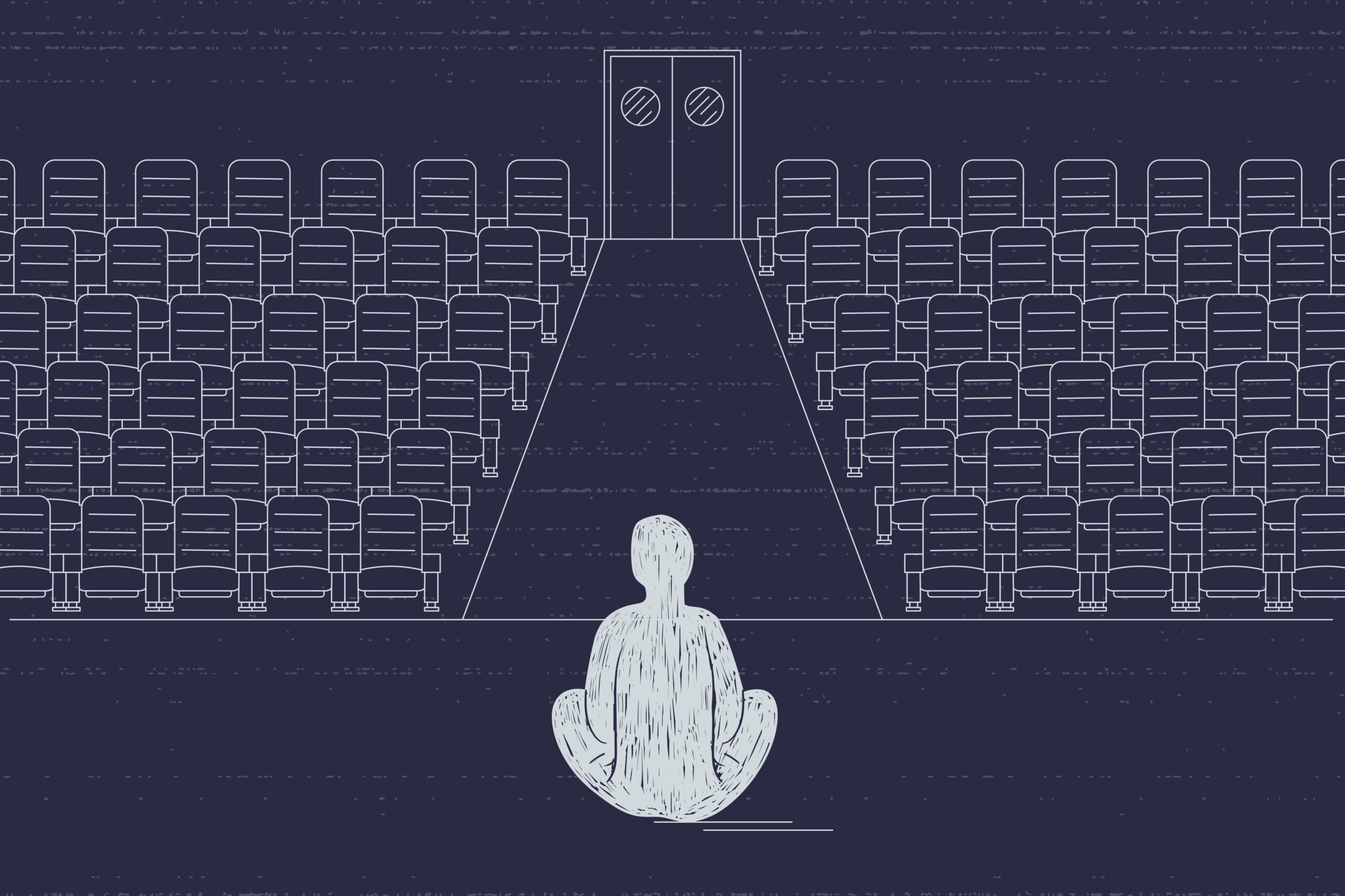
There is a moment after certain relationships when the person is gone, but not gone enough.
They are no longer beside you in the ordinary way. They are not in the room, not in the conversation, not in the rhythm of the day as they once were. And yet they remain strangely active.
They appear in the pause before sleep.
They return in the song you did not expect to hear.
They sit inside the habit of checking your phone.
They are present in the question you keep asking yourself, even when you already know there may not be a satisfying answer.
This is one of the quiet cruelties of emotional attachment: absence does not always arrive all at once. Sometimes the person leaves before the bond does.
And so you are left with a strange task.
Not simply to move on.
Not simply to forget.
Not simply to become stronger, cleaner, wiser, colder, or less affected.
But to let someone become absent in the places where they still feel emotionally alive.
Absence Is Not the Same as Emptiness
When someone is gone, people often describe the feeling as empty.
But that is not always accurate.
Sometimes absence is not empty at all. Sometimes it is crowded.
Crowded with unfinished conversations. Crowded with possible meanings. Crowded with versions of the relationship that almost happened, might have happened, or seemed to be happening before everything changed.
You may not only miss the person. You may miss the structure they gave your days. The future you quietly rehearsed. The version of yourself that existed when being close to them still felt possible.
This is why missing someone can feel so much larger than the relationship itself.
The Quiet Mark explores this exact confusion in its essay on why missing an ex feels so intense, describing how the pain is often not only about wanting someone back, but about attachment, memory, routine, and the nervous system adjusting to absence.
That distinction matters.
Because if you treat every wave of missing as proof that the relationship was right, you may keep returning to the wound for evidence. You may confuse intensity with instruction. You may begin to believe that because something still hurts, it must still be yours to repair.
But not every ache is a command.
Some aches are simply the body discovering that a familiar emotional pattern has ended.
The Mind Keeps Returning Because It Wants Completion
People often blame themselves for thinking too much after a breakup.
They ask why they cannot stop replaying what happened. Why they keep imagining different conversations. Why they still wonder what the other person feels, whether they regret it, whether they miss them, whether they ever understood the damage.
But the mind is not always trying to torture you.
Sometimes it is trying to complete something that ended without enough emotional resolution.
It wants the sentence finished.
It wants the contradiction solved.
It wants the person who withdrew to explain the withdrawal. It wants the person who hurt you to understand the hurt. It wants the person who did not choose you clearly to somehow return with clarity.
This is why absence can become mentally loud.
The person may be physically gone, but psychologically they remain the subject of an unfinished argument.
You keep returning to the story because some part of you still believes the story contains a hidden key.
If you could understand what happened, maybe it would stop hurting.
If you could find the missing detail, maybe the loss would become less humiliating.
If you could prove that you mattered, maybe the rejection would not feel so final.
But some endings do not become peaceful because the other person explains them better. Some endings become survivable only when you stop requiring the person who confused you to become the person who frees you.
Letting Go Is Not the Same as Declaring It Meant Nothing
One reason people resist letting go is that it can feel like betrayal.
If you let go, did you stop loving them?
If you stop hoping, did it mean the relationship was not important?
If you move forward, are you abandoning the version of yourself who once believed in the connection?
These questions are painful because love often makes suffering feel meaningful. Holding on can begin to look like loyalty. Waiting can begin to look like devotion. Not moving on can feel like a final way of honoring what happened.
But suffering is not the only proof that something mattered.
You can remember without remaining emotionally available to the wound.
You can admit that someone changed you without continuing to organize your life around them.
You can carry tenderness for what was real without using that tenderness as a reason to stay attached to what is no longer mutual.
The Quiet Mark’s essay on why letting go is not the same as giving up makes this distinction clearly: letting go is not coldness, denial, or emotional deletion. It is the moment you stop allowing care to override what is real.
That may be the most difficult part.
Because reality often arrives before readiness.
You may know they are not choosing you. You may know the relationship is no longer healthy. You may know the pattern has repeated too many times. You may know that contact would reopen more than it would repair.
And still, the emotional body lags behind.
Still, part of you waits.
Still, some inner reflex turns toward them.
That does not mean you are failing. It means attachment is slower than logic.
When Someone Does Not Choose You Clearly
There is a specific kind of pain that comes from being almost chosen.
Not fully rejected, perhaps. Not fully embraced either.
Just held in uncertainty.
Warmth, then distance. Closeness, then silence. Hope, then confusion. Enough affection to keep you invested, but not enough consistency to make you secure.
This kind of connection can be harder to release than a clean ending because the mind keeps negotiating with possibility.
Maybe they need time.
Maybe they are afraid.
Maybe they care in a way they cannot express.
Maybe if you become calmer, softer, clearer, less needy, more patient, more understanding, more forgiving, then the relationship will finally become what it almost was.
This is where hope can become a private trap.
Not because hope is foolish, but because unclear hope can keep a person emotionally loyal to someone who is not meeting them clearly in return.
Left Unsaid’s guide on how to let go of someone who doesn’t want you frames this problem with unusual precision: letting go is not about pretending the person did not matter, but about accepting that longing and attachment are not enough when the other person is not choosing you clearly.
That sentence contains a hard truth.
Love can be real and still not be mutual enough to build on.
Longing can be powerful and still not be evidence that you should return.
Attachment can be intense and still not be wisdom.
The body can want relief from the very person whose inconsistency created the wound.
That is one of the reasons letting go can feel less like a decision and more like withdrawal.
Why Not Being Over Someone Does Not Prove You Should Go Back
One of the most dangerous assumptions after a breakup is this: if I am not over them, it must mean something.
And yes, it does mean something.
But not always what people think.
It may mean the attachment is still active. It may mean the ending was abrupt, confusing, or emotionally unfinished. It may mean rejection touched an old wound. It may mean your routines still orbit the absence. It may mean the mind is idealizing the good parts because the full story is too painful to hold all at once.
It does not automatically mean the relationship should continue.
It does not automatically mean they were right for you.
It does not automatically mean the bond was healthy, reciprocal, or safe.
Left Unsaid’s broader pillar on why you are not over your ex is useful here because it separates emotional attachment from romantic destiny. It explains why grief, rejection, idealization, unfinished closure, and attachment withdrawal can keep someone psychologically present long after the relationship itself has ended.
That distinction can save a person from mistaking pain for proof.
Not being over someone does not always mean you chose wrong.
Sometimes it means your system is still detaching from a person who became deeply familiar.
Sometimes it means you are grieving the future, not just the person.
Sometimes it means you are still waiting for the ending to feel fair.
But healing does not require the ending to become fair before you begin living again.
The Fantasy Can Outlive the Person
Often, what remains after a relationship is not the relationship itself.
It is the imagined version of what it could have become.
The conversation where they finally understand.
The apology that changes the whole story.
The return that proves you were not replaceable.
The future where all the confusion becomes worth it because the relationship finally becomes stable, clear, and mutual.
This fantasy can be emotionally powerful because it contains the repair the real relationship did not provide.
In the fantasy, the person becomes available.
In the fantasy, the pain gets meaning.
In the fantasy, your waiting was not wasted.
In the fantasy, love wins because it finally becomes safe.
But sometimes the fantasy is the final form of attachment.
It keeps the person alive not as they were, but as they might become if the story could be rewritten with tenderness at the end.
Letting go, then, is not only letting go of a person.
It is letting go of the imagined repair.
It is allowing the story to remain imperfect without giving the rest of your life to the hope of correcting it.
Absence Has to Become Real in the Body
There is a difference between knowing someone is gone and feeling that your life no longer has to turn toward them.
The first is information.
The second is integration.
Integration takes longer because the body learns through repetition.
Not checking.
Not texting.
Not rehearsing the argument.
Not building the day around the possibility of a sign.
Not treating every wave of longing as evidence that the separation was wrong.
These are not glamorous acts. They are quiet, repetitive forms of emotional retraining.
Each time you do not return to the old pattern, absence becomes a little more real.
Not because the person meant nothing.
But because your life begins to stop arranging itself around them.
There Is Grief in Choosing Yourself
People often speak about choosing yourself as if it feels instantly empowering.
Sometimes it does.
But often it feels sad.
It can feel like closing a door you wished someone else would walk through. It can feel like admitting that love did not become enough. It can feel like betraying the hope that kept you going.
Choosing yourself may come with grief because you are not only gaining dignity. You are losing an imagined ending.
You are letting go of the version of the story where they finally choose you clearly.
You are letting go of the version where all the waiting becomes meaningful.
You are letting go of the version where the hurt is redeemed by return.
That loss deserves tenderness.
But grief is not always a sign that you are making the wrong choice.
Sometimes grief is what happens when you finally stop negotiating with a reality you did not want.
The Quiet Mark of Recovery
Recovery is often quieter than people expect.
It may not feel like victory.
It may not feel like closure.
It may not even feel like happiness at first.
It may feel like a little less urgency.
A little less checking.
A little less need to know what they are doing.
A little more ability to remember the full relationship, not only the beautiful parts.
A little more space between the feeling and the action.
Eventually, the person may still cross your mind, but they no longer command your direction.
You may still remember, but you do not reorganize yourself around the memory.
You may still feel tenderness, but it does not send you backwards.
You may still wonder, but the wondering no longer becomes a home.
This is how someone becomes absent in the deeper sense.
Not erased.
Not hated.
Not denied.
Just no longer central.
What Remains
After someone becomes absent, something else begins to return.
At first, it may not feel like much.
A quieter morning.
A decision made without wondering what they would think.
A night where you do not check.
A memory that hurts but does not take the whole day with it.
A future that no longer requires their return to become imaginable.
These things are small, but they matter.
They are the early signs of a life becoming your own again.
Not because the relationship meant nothing.
Not because you stopped caring on command.
Not because absence became easy.
But because you slowly stopped confusing attachment with obligation.
You stopped turning pain into evidence.
You stopped asking longing to make your decisions.
And little by little, the person who once occupied the center of your inner life became something else.
A chapter.
A wound.
A memory.
A teacher, perhaps.
But not the place you live anymore.
Source context: This essay references related essays from The Quiet Mark on missing an ex and letting go, alongside Left Unsaid’s pillar guides on letting go of someone who does not choose you and understanding why you may not be over an ex.