A pair of jeans can be the wrong cut and we usually blame the jeans.
A shirt can pull strangely across the shoulders and we blame the shirt.
But when a bra gaps at the top, sits empty against the chest or seems to need three centimetres of foam before it looks “right,” the judgment often turns inward.
Maybe I am too small.
Maybe my body is shaped wrong.
Maybe bras just are not made for me.
That is how a clothing problem quietly becomes a body problem.
A Bra Can Fit the Size and Still Miss the Shape
One of the most misleading things about bra shopping is the assumption that the size printed on the label tells the whole story.
It does not.
Two bras in the same nominal size can have completely different cup depths, wire widths, cup heights and padding placement.
For someone with a smaller or shallower bust, that difference can be enormous.
A cup may technically contain the right amount of volume while still expecting the breast to project farther forward than it naturally does.
That is when you get the familiar gap along the top edge.
And because the empty space is so visible, it is easy to assume the body is the problem.

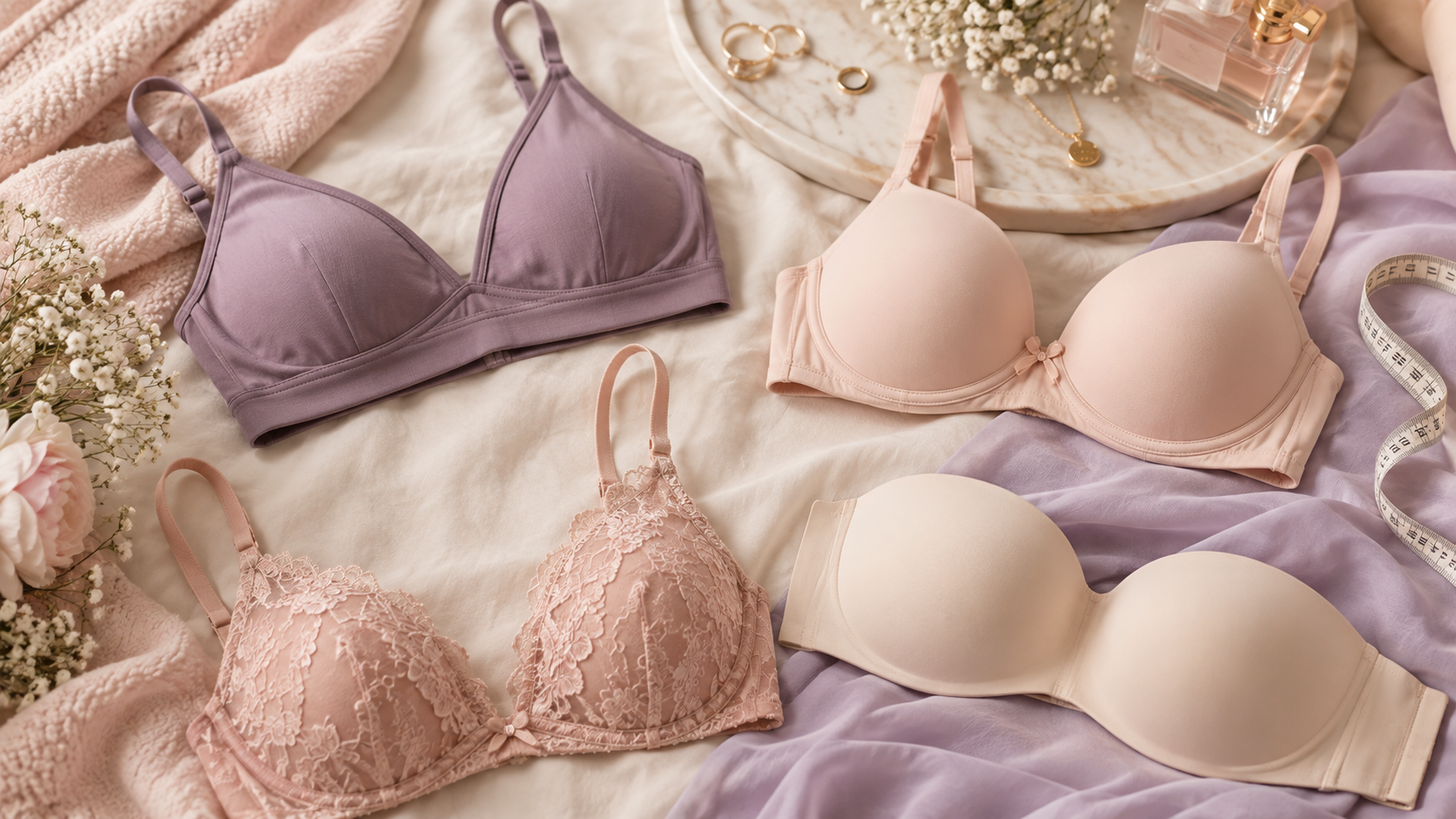
Image description: A specialist small-cup bra from the Little Women range, designed for AAA, AA and A cup sizes.
The Difference Between “Too Big” and “Too Deep”
This distinction matters more than it sounds.
If the top of a moulded bra stands away from the chest, the instinct is often to size down.
Sometimes that works.
Sometimes it makes everything worse.
The wire becomes too narrow. The cup starts cutting into breast tissue. The band feels tighter. And somehow the top edge still does not sit properly.
That is because the issue was not necessarily that the cup held too much volume.
It may simply have been too deep.
Once you understand that, the fitting room becomes a little less brutal.
A personal account of that shift appears in what finally worked when shopping for bras for a small bust. The central idea is simple: stop asking what is wrong with your chest and start asking whether the bra was designed for it.
Small Breasts Are Often Sold the Wrong Solution
There is another reason small-bust shopping becomes confusing.
Marketing tends to assume that if breasts are small, the customer must want them to look bigger.
So the solution becomes padding.
More foam.
More lift.
More cleavage.
More volume.
But a lot of women are not looking for transformation.
They are looking for a bra that sits flat against the body, feels comfortable, works under clothing and does not create empty space where the cup expects a different breast shape.

Image description: A non-wired cotton T-shirt bra designed with smaller busts in mind, showing how everyday fit and comfort can be separate from enhancement.
That is why guides comparing the best bras for small breasts are useful when the problem is basic fit rather than enhancement.
Push-Up Is a Different Question Entirely
Wanting a push-up bra is not the same thing as needing one.
That difference matters.
If the goal is a smoother everyday fit, maximum padding may actually make things harder.
If the goal is more cleavage, more upper fullness or a different silhouette under a dress, then push-up construction becomes relevant.
The useful question is not:
How much padding does this bra have?
It is:
Where is the padding, and what is it trying to do?
Padding underneath the breast tends to create upward lift.
Padding toward the outer edge can encourage tissue inward.
Some designs combine both.

Image description: An ultra-padded small-cup bra from Little Women, designed specifically for AAA, AA and A cups to create more visible fullness.
If that is the effect you want, the comparison of the best push-up bras for small busts separates different kinds of lift rather than treating every padded bra as the same thing.
Where the Padding Sits Can Matter More Than How Much There Is
This is particularly noticeable when breasts sit naturally farther apart.
A bra with a lot of padding underneath may create lift but very little central cleavage.
A design with padding at the outer side of the cup can create a different effect by moving tissue inward.
The After Eden Two Way Boost is an example of that construction. Its current product description specifies two boosting pads: one beneath the bust and another at the side.

Image description: An underwired gel bra with boost padding positioned beneath and beside the bust to create both upward and inward shaping.
The Emotional Cost of Getting the Fit Wrong
The technical explanation is straightforward.
The emotional one is harder.
When clothing repeatedly fails to accommodate a body, people often start treating the body as the failure.
A bra cup gaps.
So the breasts are “too small.”
A push-up does not create the same cleavage seen in an advert.
So the chest is “wrong.”
A lingerie model fills out a moulded cup differently.
So your body becomes something that needs fixing.
But a bra is not an objective measurement of attractiveness.
It is a manufactured object built around a particular set of proportions.
A badly fitting bra is evidence that the bra does not fit. It is not evidence that your body failed.
There Is Nothing Wrong With Wanting Enhancement
Body acceptance can sometimes get flattened into another rule.
As though liking push-up bras means you secretly dislike yourself.
That is not necessarily true either.
You can like cleavage.
You can enjoy a fuller shape under a particular outfit.
You can choose padding because you prefer the silhouette.
The difference is whether the choice feels like styling or camouflage.
One says:
I like what this bra does with this dress.
The other says:
I cannot let anyone see what I really look like.
Those are very different emotional experiences.
Start With the Problem You Actually Have
If bras repeatedly gap, begin with fit.
Look at cup depth, projection, wire width and cup height before assuming you simply need a smaller size.
If the everyday fit is fine and you want more lift, then compare push-up construction instead.
If you want to hear how that distinction feels from the inside rather than as a fitting guide, read I Stopped Buying Bras That Were Made for a Body I Don’t Have.
For practical shopping comparisons, see the guides to the best bras for small breasts and the best push-up bras for small busts.
The goal does not have to be making your body look bigger.
Sometimes the real relief is finding clothing that finally stops making you feel smaller.
Sources
- Little Women — specialist small-cup lingerie product information for AAA, AA and A cup ranges.
- After Eden — bra construction and product information for boost and gel-padded styles.
- NHS: Breast pain — general guidance on breast discomfort and the importance of properly fitting bras.
- Breastcancer.org — general breast awareness information.